


Kapag namumula ang ating mata, madalas nating iniisip na baka harmless naman ito at kailangan lang palipasin. But what might seem like a minor concern could actually be a sign of something more serious: an eye infection.
Eye infections can range from mild to severe, and if left untreated, they can even lead to serious complications such as permanent vision loss. Yes, posible talagang mauwi sa pagkabulag ang eye infection kapag ito ay hindi naagapan at tuluyang napabayaan. That’s why it’s important to understand kung ano ba ang eye infection—from its causes and symptoms to how it can be prevented and treated.
Ano ang Eye Infection?
Eye infections occur when harmful microorganisms, such as bacteria, viruses, or fungi, enter the eye and cause irritation and inflammation. Maaaring pumasok ang mga microorganisms na ito sa ating mata dahil sa eye injuries, pagkuskos ng mata gamit ang maruming kamay, o kaya dahil sa maruming contact lenses. Eye infections can also affect different parts of your eye tulad ng eyelids, conjunctiva, or cornea. Depende sa sanhi at sa affected part ng mata, mayroong iba’t ibang uri ng eye infection.
Common Types of Eye Infections
Below are some of the most common eye infections:
- Conjunctivitis
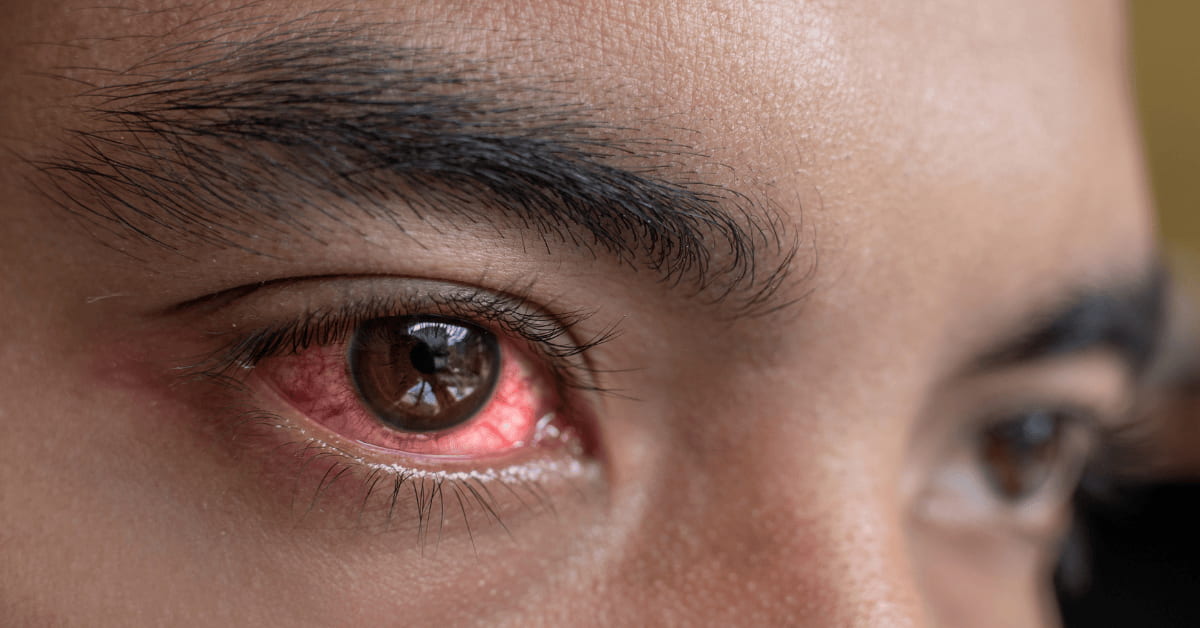
Conjunctivitis is one of the most prevalent eye infections. It affects the conjunctiva (the thin layer that covers the white part of your eye and the inside of your eyelids). It is usually caused by bacteria or a virus, and this kind of conjunctivitis is highly contagious. Conjunctivitis can also result from allergies or exposure to chemicals and irritants, such as chlorine in swimming pools and air pollution. Depending on the cause, the symptoms may vary. Ngunit isa sa mga karaniwang sintomas nito ay ang pamumula ng mata kaya kilala rin ito bilang “pink eye.” Maaari rin itong magdulot ng discharge sa mata, pananakit, at pamamaga ng mata.
- Keratitis
Keratitis, or corneal ulcer, is a more serious infection affecting the cornea (the clear front cover of the eye). It is caused by either an infection (bacterial, viral, fungal, or parasitic) or an eye injury. Madalas itong nangyayari sa mga gumagamit ng contact lens, lalo na kapag hindi ito tinatanggal bago matulog. Wearing your lenses while swimming can also cause keratitis dahil sa mga kemikal at mikrobyo na nasa tubig.
Isa rin sa mga posibleng sanhi ng keratitis ang fungus. Some fungal species that can cause fungal keratitis include: Fusarium, Aspergillus, and Candida. This type of keratitis is common in countries with warmer climates such as the Philippines. The Fusarium species, in particular, are usually found in soil, water, and plants in tropical regions. Maaari kang makakuha ng fungal keratitis kapag nasugatan ng halaman ang iyong mata o kapag na-expose ito sa kontaminadong tubig o lupa.
The symptoms of keratitis can include redness, pain, excessive tearing, blurred vision, and sensitivity to light. If you experience any of these symptoms, get it checked by a doctor immediately. Mahalagang maumpisahan agad ang gamutan nito dahil maaaring mauwi sa pagkabulag kapag hindi naagapan. Bacterial infections usually improve within a week, while fungal keratitis takes longer to treat.
- Orbital cellulitis
Orbital cellulitis is an infection that affects the tissues and fat that hold the eye in its socket. It is typically caused by bacteria, such as the Streptococcus species and Staphylococcus aureus, pero maaari rin itong magmula sa fungi. Most cases of orbital cellulitis start from an untreated sinus infection that eventually spreads to the eye. Maaari rin itong magmula sa tooth infection o iba pang bacterial infection na kumalat sa blood stream. It can also be from wounds, bug bites, or animal bites near the eye.
Maliban sa pamumula at pananakit ng mata, other symptoms of orbital cellulitis include proptosis or bulging eye, fever, headache, discharge, impaired vision, and difficulty moving the eye. Mabilis kumalat ang cellulitis kaya mahalagang maagapan ito. Moreover, if left untreated, it can cause vision loss at maaari ring kumalat ang impeksyon sa ibang bahagi ng iyong katawan.
- Trachoma
Trachoma is the world’s leading cause of infectious blindness. It is caused by a bacterium called Chlamydia trachomatis, and it can be transmitted through an infected person’s eye and nose discharges. Maaari rin itong maipasa ng mga insekto. Ayon sa datos ng World Health Organization, ang kondisyon na ito ang sanhi ng pagkabulag ng halos 2 milyong tao. This condition is prevalent in developing countries, lalo na sa areas with poor sanitation.
In the initial stages, trachoma typically presents with mild symptoms such as itching and irritation of the eyes. It may also cause eye discharge. Kapag hindi agad ito na-address, maaari itong mag-progress to more severe symptoms tulad ng eye pain at blurred vision. If left untreated, nagdudulot ito ng scarring o pagpepeklat sa eyelids. After years of repeated infection, this scarring can cause your eyelashes to turn inwards. Dahil dito, nagagasgas ng iyong pilikmata ang cornea, leading to corneal ulcers and potentially vision loss. At ang pagkabulag na dulot ng trachoma is irreversible. Trachoma is usually treated with antibiotics, but severe cases may require surgery.
Paano Nalalagay ng Eye Infection sa Panganib ang Ating Paningin?
Hindi agad-agad na nakakasira ng paningin ang eye infections. Kapag ito ay naagapan, your eye can heal and recover without issues. However, the complications of an untreated eye infection can be dangerous and even permanent. If no action is taken, maaaring humantong ang impeksyon sa mata sa mga komplikasyon tulad ng corneal scarring which can cause blurry vision, and in some cases, partial or total blindness. Kaya mahalagang kilalanin agad ang mga early signs ng eye infection at huwag itong balewalain. Here are some symptoms of eye infections that warrant medical attention:
- Eye pain
- Red eyes
- Itchy or burning eyes
- Thick or watery discharge from eyes
- Swollen eye and/or eyelids
- Blurry vision
- Light sensitivity
If you are experiencing any of these symptoms, contact your physician immediately. The earlier you detect and treat an eye infection, the lesser the risk of complications.
How to Prevent Eye Infections?
The good news is that most eye infections are preventable, especially if you’re practicing good hygiene. Here are some tips para maiwasan ang eye infection:

- Always wash your hands. Our hands carry bacteria and viruses, and frequent handwashing helps protect us from these microbes.
- Avoid rubbing your eyes. Kahit makati ito, iwasang kuskusin ang mata dahil lalo lamang makakapasok ang mikrobyo dito. You can use a soft wash cloth to clean your eyes instead.
- If you are using contact lenses, make sure to keep them clean. Maaaring bahayan ng mga bacteria, viruses, fungi, at parasites ang contact lenses mo kaya siguruhing malinis ito bago mo gamitin.
- Avoid sharing items that touch your eyes. Sharing personal items such as eye makeup and towels are some of the common ways na kumakalat ang bacteria at virus.
- Wear protective eye gear if needed. Kung ikaw ay exposed sa mga chemicals, debris, and other irritants sa iyong trabaho, protektahan ang iyong mata by wearing safety glasses.

Always remember that prevention is better than cure, lalo na’t eyesight mo ang nakataya. Following these simple tips can go a long way in keeping your vision clear.
Paano Ginagamot ang Eye Infection?
Eye infection treatment depends on its cause. If the infection is caused by a virus or from an allergy, you may have to let them clear on their own. But you can manage or ease the symptoms by using a clean, warm cloth to relieve any discomfort. You may also use over-the-counter pain relievers and antihistamine. For infections caused by bacteria, on the other hand, antibiotic drops are usually prescribed.
Ganda Ng Buhay Pag Me’Choice—That’s The MedChoice Promise
As previously mentioned, bacterial infections do not resolve on their own. Hindi rin ito kaya ng home remedies at nangangailangan ito ng antibiotic eye drops. But with so many options out there, how do you know which ones to trust?
If you are looking for some of the best antibiotic eye drops in the Philippines, MedChoice Pharma offers reliable solutions for different kinds of eye infection katulad ng Moxifloxacin (MOXIDIN®) which is an anti-infective eye drop used for bacterial conjunctivitis, tarsadenitis, and keratitis (including corneal ulcer). We also have Polymyxin – B Sulfate + Neomycin + Dexamethasone (MAXIDIN®) used for the short-term treatment of inflammatory eye conditions caused by bacteria. Maxidin® can also be used for some external ear infections. We also offer Tobramycin (MYCINIDIN®) na maaaring gamitin for a wide range of ocular infections. Ang ganda talaga ng buhay pag Me’Choice, ‘di ba?
While these medications are effective, mahalagang sumangguni muna sa inyong healthcare provider before using any antibiotic eye drop. Do not self-medicate because it might worsen your condition. For more information about Moxidin®, Maxidin®, and Mycinidin®, visit our Vision Care page.
Disclaimer: This information is not intended to substitute professional expertise. Ask your doctor or healthcare provider for diagnosis and treatment.
References:
American Optometric Association. (n.d.). Conjunctivitis. Retrieved July 2, 2025, from https://www.aoa.org/healthy-eyes/eye-and-vision-conditions/conjunctivitis.
—. (n.d.). Keratitis. Retrieved July 2, 2025, from https://www.aoa.org/healthy-eyes/eye-and-vision-conditions/keratitis.
Barraquer. (2025). Eye infections that can affect vision. Retrieved July 2, 2025, from https://www.barraquer.com/en/news/infections-affect-eyes.
Boyd, Kierstan. (2024). What is Cellulitis? Retrieved July 2, 2025, from https://www.aao.org/eye-health/diseases/what-is-cellulitis.
Cleveland Clinic. (2023). Eye Infections. Retrieved July 2, 2025, from https://my.clevelandclinic.org/health/diseases/25000-eye-infection.
Delfaro, Anni. (2024). Eye Infections. Retrieved July 2, 2025, from https://www.aao.org/eye-health/eye-infections.
Taylor, Rebecca. (2020). Eye Infections: Be Careful Now or Regret Later. Retrieved July 2, 2025, from https://www.aao.org/eye-health/tips-prevention/eye-infections-be-careful-now-to-avoid-them.
Turbert, David. (2024). What is Fungal Keratitis? Retrieved July 2, 2025, from https://www.aao.org/eye-health/diseases/what-is-fungal-keratitis.
—. (2025). What is a Corneal Ulcer? Retrieved July 2, 2025, from https://www.aao.org/eye-health/diseases/corneal-ulcer.
—. (2024). What is Trachoma? Retrieved July 2, 2025, from https://www.aao.org/eye-health/diseases/what-is-trachoma.
Whelan, Corey. (2019). What to Know About Orbital Cellulitis. Retrieved July 2, 2025, from https://www.healthline.com/health/orbital-cellulitis.
World Health Organization. (2024). Trachoma. Retrieved July 2, 2025, from https://www.who.int/news-room/fact-sheets/detail/trachoma.